Showing posts with label kodak. Show all posts

6.1.14

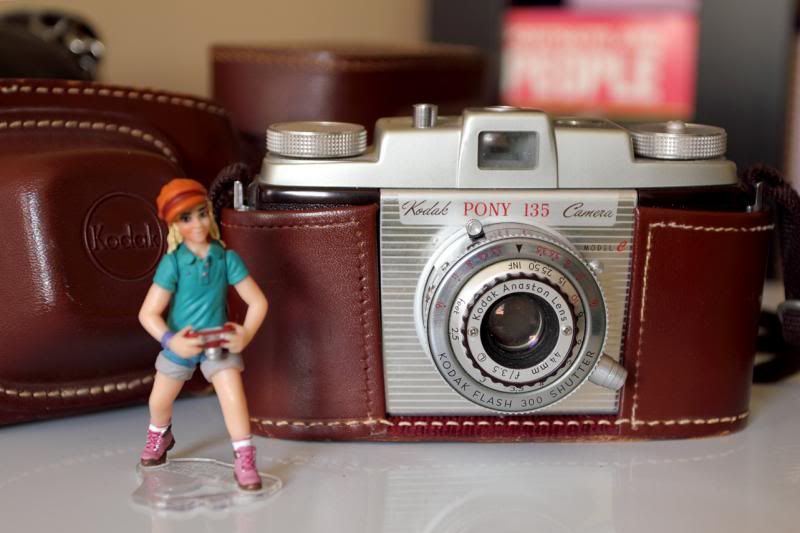
Kodak Pony (Model C)


Hey yall!

A lot has changed since my last update here. We have relocated to Calgary where I am still in the IATSE 669 trainee program. So far so good. We are renting a lovely house and I have my own office/photo studio. Quasi photo studio. It's small and I don't have any strobes or anything but it's more than I had before!

The camera I'm reviewing today is the Kodak Pony, which I purchased at... you know what I don't even remember. It was either at the Vancouver Camera Show & Swap Meet or at a thrift store. Sorry. I'll edit this if it comes back to me.

Anyhow, this camera originally caught my attention due to its design and appearance. You can see in the photo it's got the classic Kodak post-war look going on. This is a model C so it has a shorter lens and faster shutter speeds than its predecessors, and the lens doesn't collapse into the camera.

One attractive thing about the camera is the interface. You can manually select focus (zone focusing), shutter speed and aperture (the iris has 6 blades, which is pretty fancy for a camera like this), and each f-stop is marked with the appropriate lighting conditions for either Kodachrome or Ektachrome film. It also has a shutter cock (but has a system in place to prevent double exposure) and a flash cable jack.

Let me sum this up: it's a pretty simple and light camera, but it's set up to do some more involved things, if you're so inclined. And as I said the iris is nicer than most viewfinder cameras, as are the lens and the shutter (1/300sec is pretty fast for this time/style). I think it's safe to conclude that this was intended to be a mid-range camera for the interested consumer. I would compare it to Canon's Rebel series today: not super expensive but not cheap either, and made for consumers who want more control than a point-and-shoot would offer.

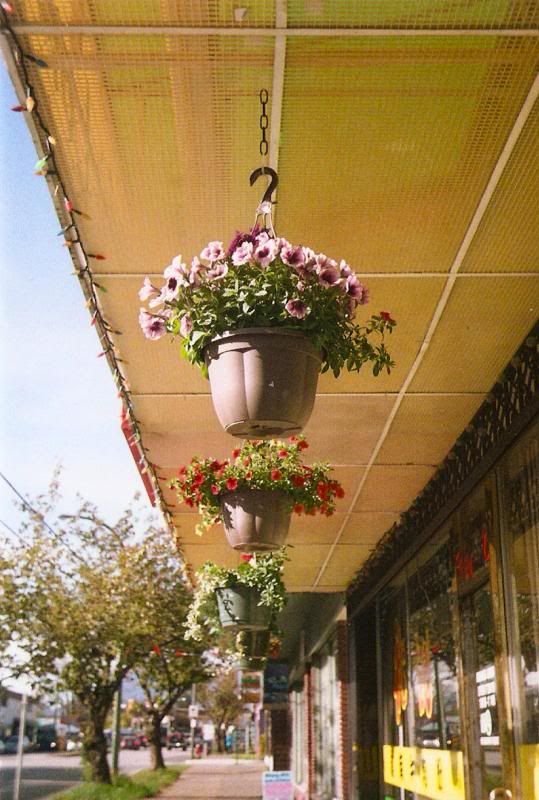
To be honest, I wasn't overly thrilled with the results I got, but it should be noted that I was exposing without a meter (I use the sunny f16 rule which is based on my brain and eyeballs and is therefore SUPER accurate) and my model is a bit beat up. The photos I got look a lot like those from other viewfinder cameras I've used. That being said, the way the shallow focus falls off is really nice, and the lens is actually quite sharp. I was using cheapish colour film, too, so it might've performed better with some nice colour reversal or B&W film.

Have a look for yourself!


till next time


10.8.11

Brownie Target Six-20


Greetings! I know I'm late today... I'm visiting my family in Edmonton so I've been kind of preoccupied. That being said, this house is a treasure trove of photographic history, so I have lots of fun stuff to share with you all.

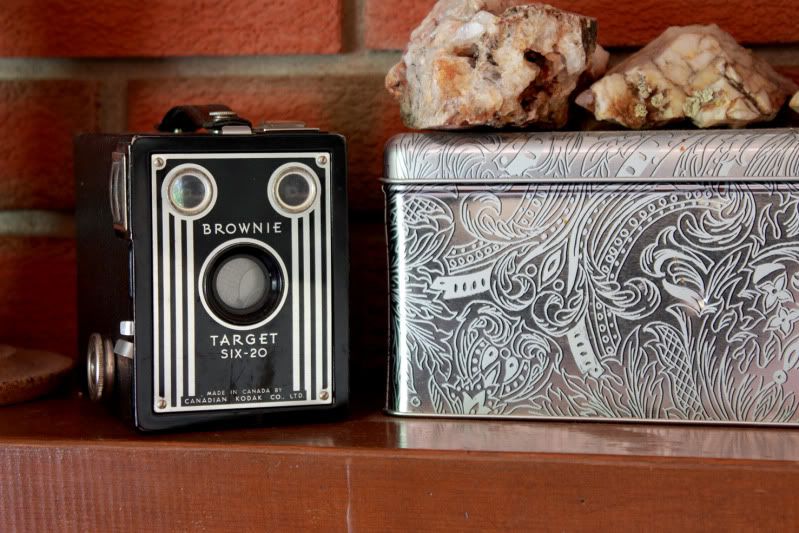
This week's camera, the Brownie Target Six-20, was the go-to camera for my grandmother when my dad was a wee one growing up in Millet, Alberta. It was produced from 1946 to 1952 and uses 620 film, which is a format similar to 120.

As you can see, it is a box camera! The Six-20 is very much like the early Brownie box cameras that brought photography to the masses, but with some slight improvements such as a variable aperture (f11 and f16.... I think) and two viewfinders (landscape vs. portrait). It has two shutter speed settings, "I" and "B," "I" being the "instant" setting (around 1/40 sec). This model was manufactured in Canada.

Alright, it's a nice show piece and a neat little piece of history, but once you've seen one box camera, you've seen them all, maybe. However, this particular dusty shutter is more valuable than a website or a collector could evaluate. It cost my grandma probably around five Canadian dollars, but it's left us grandkids with a basement full of treasure.

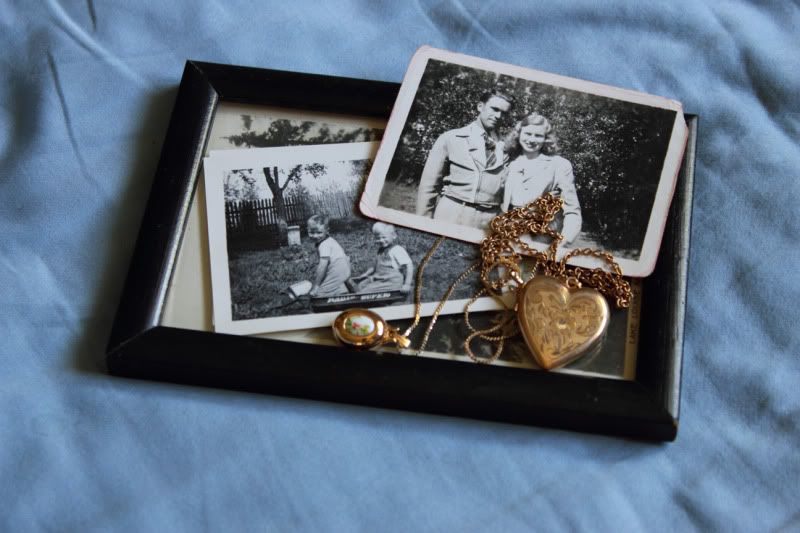
My grandpa died when my dad was very young, so this box camera saw more of him than my dad did, and I didn't see him at all. But I can still see what kind of man he was, and see my dad in him. Although I've never met him I know he was handsome, he worked the land, and at some point he was naked except for a big rhubarb-looking leaf.

My dad grew up on the farm too, and I've often felt alienated from him by our vast difference in upbringing. When my mom met him, he already had a full-on beard, so there were never any pictures of him without. Now, I know the Brownie saw him grow up, and because of that I can see him in a little wagon with a big, familiar smile. Because the Brownie saw him, I can see that he looked just like my big brother.

And because the camera knew my grandma before age began to eat her history and her memories, I can still be her friend. While she doesn't know who I am, I see some of my sister and myself in her, and I love her just for being.


Caity

20.7.11

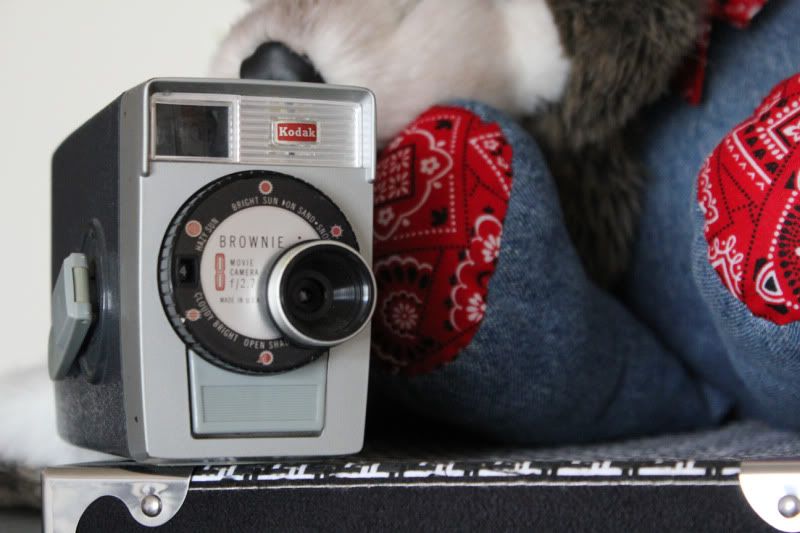
Brownie 8 Movie Camera


Hola!

A couple of days ago I got back from What The Heck Fest in Anacortes, WA, which is/was a super-rad music festival celebrating DIY in all its myriad forms. It also falls on the same weekend as Anacortes' Shipwreck Day, which is a huuuuge rummage sale that takes up several blocks. At this rummage sale I dug up a few new cameras! Yay!

One of these new cameras is the Brownie 8 Movie Camera, which I dropped a whole two bucks on. It was the childhood home movie camera of the lady I bought it from, so I'm really grateful to her for selling to me.

This is a regular 8 camera, like the Admira 8F, but what I didn't realize when I did that post is that you can load it with some light! Just not direct light, which goes without saying. Loading mag after mag of 16mm film in total darkness just made me think that 8mm must be the same. Also, I've tracked down a website where you can buy regular 8 film, at International Film Brokers. Unfortunately for me, shipping to Canada is 7 bucks PER ROLL, so I'm not going to get to test this baby any time soon.

That being said, I am enamoured with this camera. It's a wind-up, and it makes pleasing noises when it's running so I think this little guy was very well cared for. It's pretty simple to use. The exposure is manual, but each f-stop on the exposure dial has a weather descriptor paired to it. Assuming you have the right ASA, metering isn't necessary. After doing a bit of digging, I'm pretty sure these exposure suggestions were written with an ASA rating of 10 in mind, so I guess today you'd have to use that fast, mathematical photographer brain to adjust your exposure for the new film stock. I guess having 10 ASA film would make it easier to load your camera without fogging the whole roll...

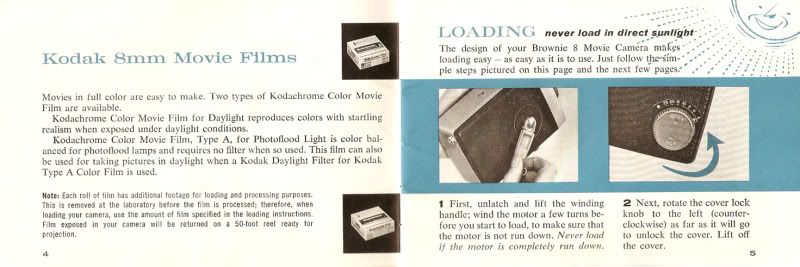
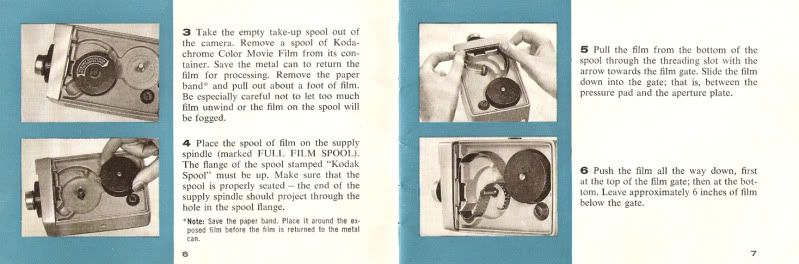
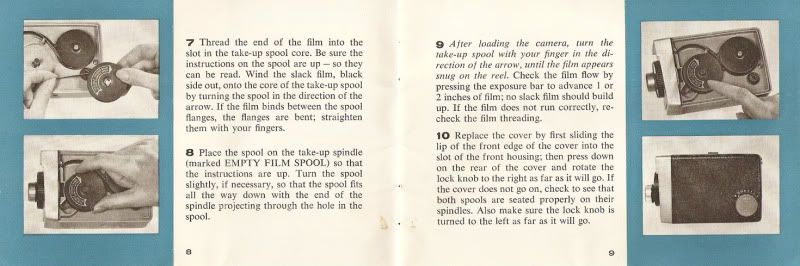
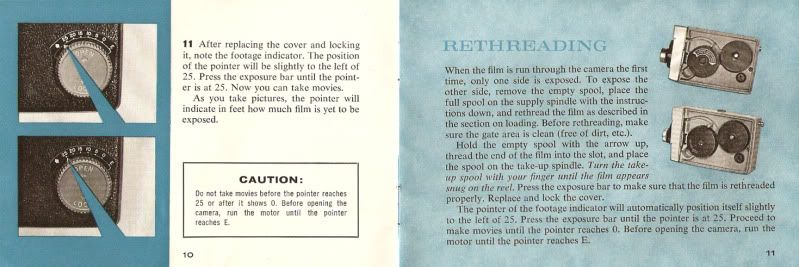
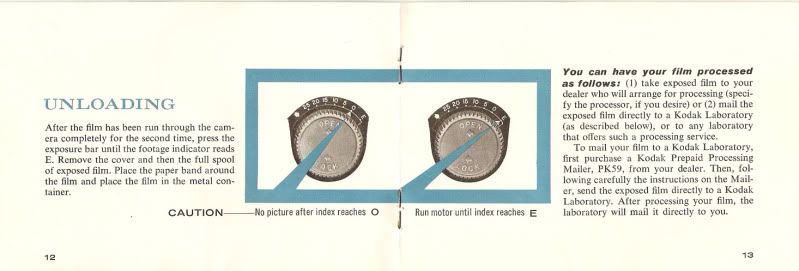
My favourite part of this deal is that the camera came in its box, with the manual, so for your reference I'm including the instructions on how to load regular 8 cameras.

Please keep in mind that the ISO rating for regular 8 film in the 1960s when this manual was printed was very low, so be careful when loading your 50 or 100 film and do it with as little light as possible.


I hope that's helpful for some of you! Of course, every camera is different but this should get you on the right track.

Cheers,
Caity

29.6.11

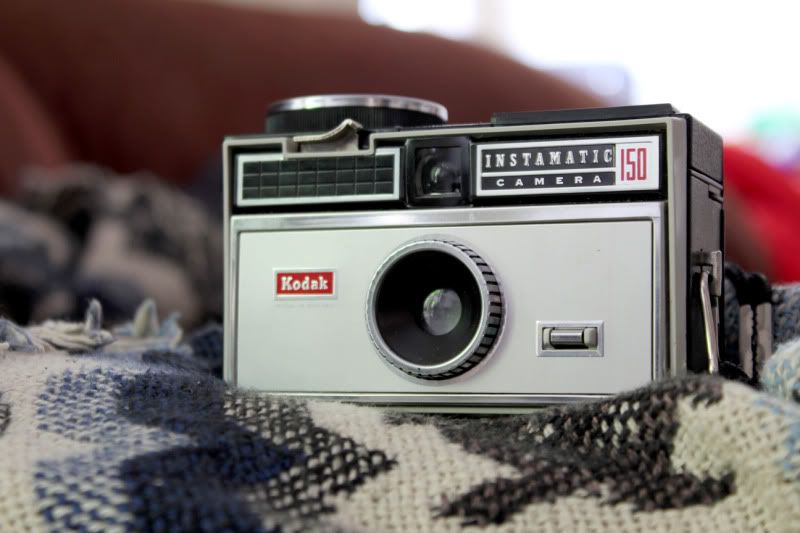
Kodak Instamatic 150


Perhaps the dustiest of shutters! It was produced in the mid 60s, but it is so utterly obsolete at this point that in some ways, it's more of an antique than, say, the Agfa Silette, although it is slightly younger. I found this guy at one of the SPCA thrift stores, where I got to hang out with a super mellow kitty.

This model is incredibly broken, in every way, so even if the film it takes was still available, I wouldn't be able to test it. That being said, it's a very interesting study in photographic history.

There's a fella over at Dusty Gizmos who does pretty much what I'm doing here, only better... He was around when a lot of this junk was brand new so he has a thorough understanding of the cultural and technical influence they've had. He explains that the 126 cartridge was introduced by Kodak to encourage people to use lots of film and not to get hung up on expensive gear. Clever, eh?

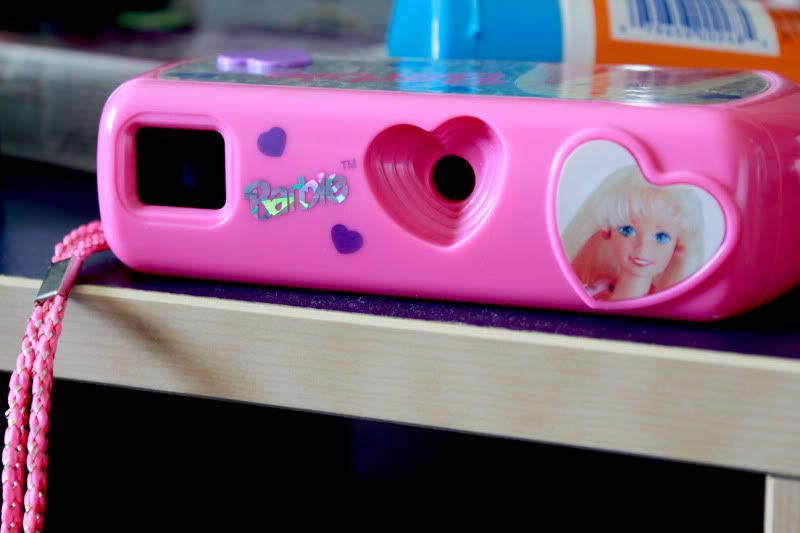
126 cartridges, and their successor, 110 cartridges enjoyed a lot of popularity. The cameras were dirt cheap and you just had to pop the cartridge in and snap away, but as you would expect, the pictures weren't always that great. Besides the lack of care put into making the cameras, the film itself is incredibly narrow (126 was around 26x26mm, 110 was 13x17mm), so obviously you wouldn't get the same angle of view or depth of field as you would with a larger format. Although the Instamatic itself died out in the late 80s, Instamatic type cameras were so cheap that they were sold well into the 90s as toys. Here's a camera that my parents gifted me with when I was a kid after it became clear I wasn't going to stop playing with their gear.


I put as much thought into those photos as one might expect, but maybe it sowed the seed for this very blog!

All that being said, as you know already, no matter how cheap or crappy the camera, there's usually a little something extra that goes into a photo that can make it beautiful, even if it was not thought out or created with technicality in mind in any way.

This young Italian lady scanned some photos from 1977, which say it all: Aglio, Olio e Peperoncino - Analogue Memories.

Edit: August 6, 2011
Previously I had a picture from Junk Store Cameras on this post to show the Barbie instamatic camera I had as a kid. I used the owner's image without permission! Fortunately I've tracked down my own camera in my parents' house, hence the new image. However, please visit Junk Store Cameras! Marcy is a great writer and her website has a lot to offer.

Have a good week!
Caity