Showing posts with label polaroid. Show all posts

30.7.13

Polaroid Colorpack IV


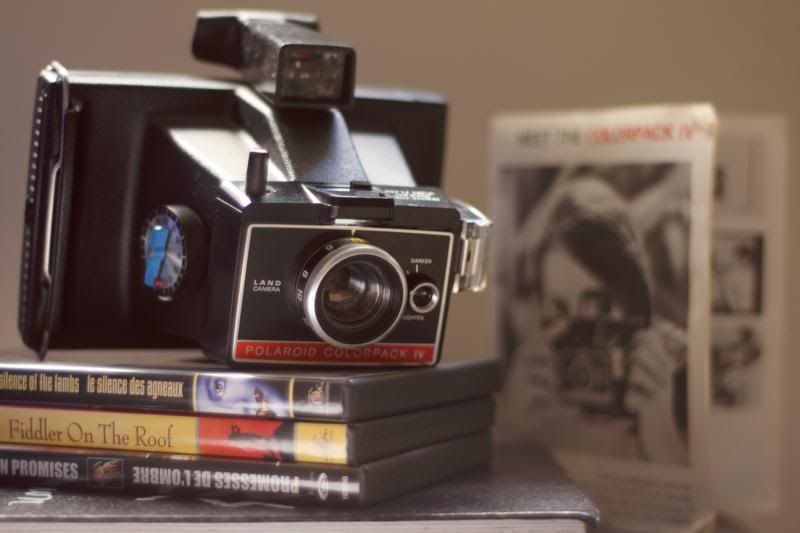
Here is the lovely Colorpack IV Land Camera! I received this from a friend whose parents heard that I collect cameras. It's not in the best shape, and this takes pack film rather than your regular Polaroid/Impossible cartridge, so I have not tested it. However, it's pretty rad looking, and it came with a case and all the manuals, so it's still a great gift.

This camera was produced late 60s/early 70s, takes 100 or 3000 ISO pack film, and has a "cold clip"-- a metal sleeve you can warm up in your armpit to develop your photo in if it's cold out.

Here are some resources:
100-type Polaroid cameras - The Impossible Project
How to use this little guy

Oddly enough, Fuji is still making 100-type film and you can buy it at B&H and other such places.

Again, I haven't tested it but the pack film look seems really unique and beautiful: check out this flickr series done with the Fuji 100 ISO pack film on a Polaroid Colorpack II. It's really quite lovely.

Researching for this post really makes me want to get this thing to work. Back to sanding those battery contacts...

23.5.12

Impossible Project


Hello! This week I'm not going to talk about a camera, but about some interesting and innovative film.

As you most likely know, Polaroid stopped making their instant film in 2008. Since then, with Polaroid's blessing, the Impossible Project has been working with Ilford Photo to bring the masses an instant film to keep Polaroid culture alive.

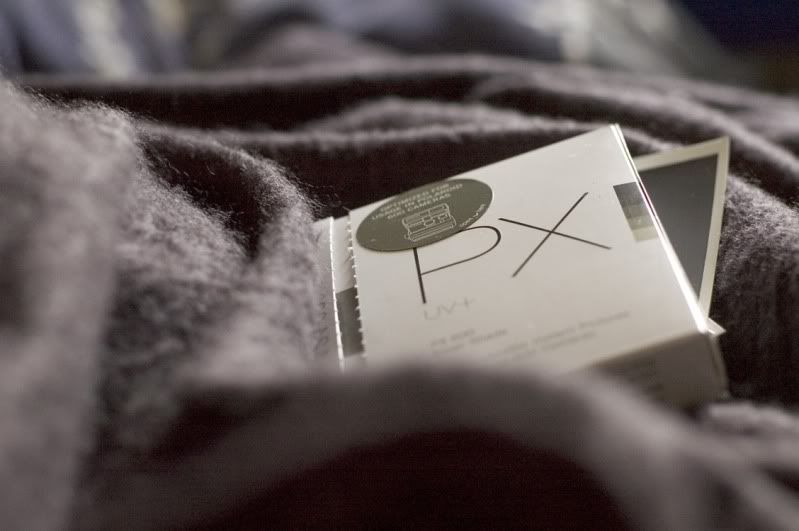
After attending the Vancouver camera show, I finally had a chance to test my Sun 640 with some Impossible Project film I bought from Camera Traders. There are a number of monochromatic and colour films available for both the 600 and SX-70 series Polaroid cameras, but the type I bought was the PX600 UV+.

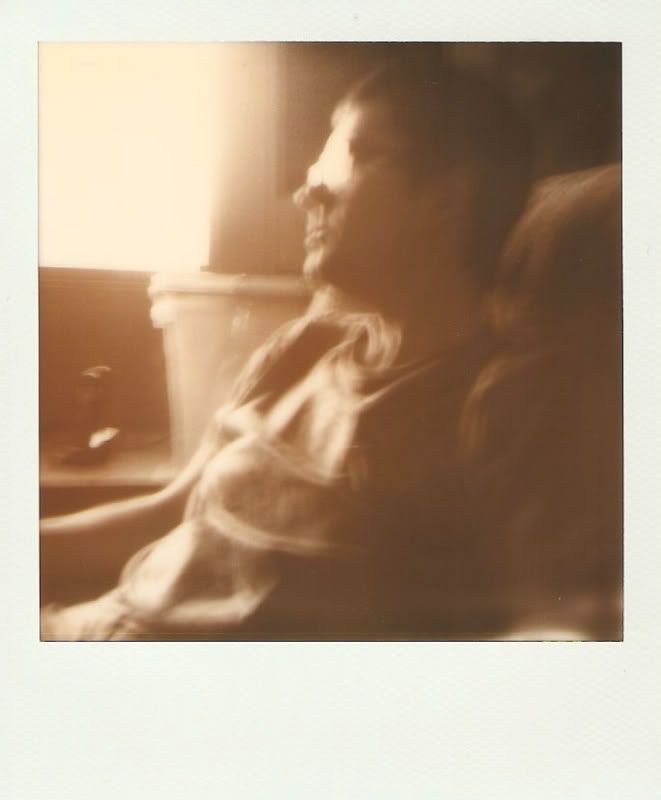
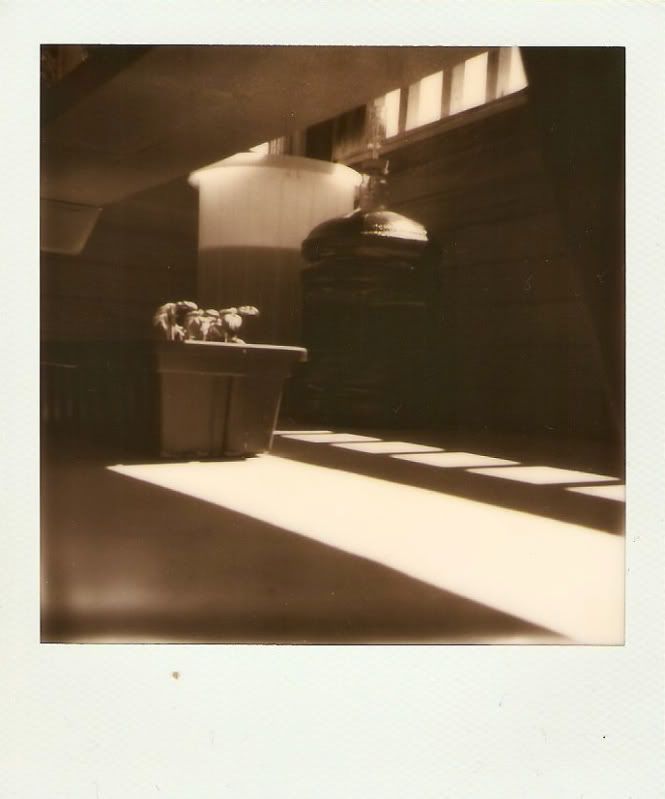
I've always loved the way Ilford film looks, and the same vibe comes through in this instant film. It's got lovely contrast but it still has pretty good latitude, picking up a lot of detail in the shadows. There is a warmness to the shades that has a lot of character.

Because this film is experimental and still in development (pun intended!) it has some quirks: the results are somewhat unpredictable and you must take care to protect your pictures from external forces. One of the main things is that you have to shade your photo right after it comes out of the camera, because it's still sensitive to light for a few minutes. You are also supposed to let the photo develop face-down, so shake, shake, shaking like a Polaroid picture is not really in vogue any more. 

Anyway, I hope this is somewhat educational, although all this information is widely available. If you want my opinion (and why wouldn't you?) it's definitely worth the dollars to pick up a pack of this film and experiment. It's not cheap (at $29 a pack, that's over $3 per shot) so it's a bit of a risk... but what the hell, life is short. The most important thing is that there are hundreds of cameras that were saved from the brink of obsolescence, and now they can be more than just another dusty piece of history.

ps, you can buy Impossible Project film at Photojojo and Urban Outfitters, as well as at many smaller, local photography businesses such as the aforementioned Camera Traders in Victoria and Blue Moon in Portland.

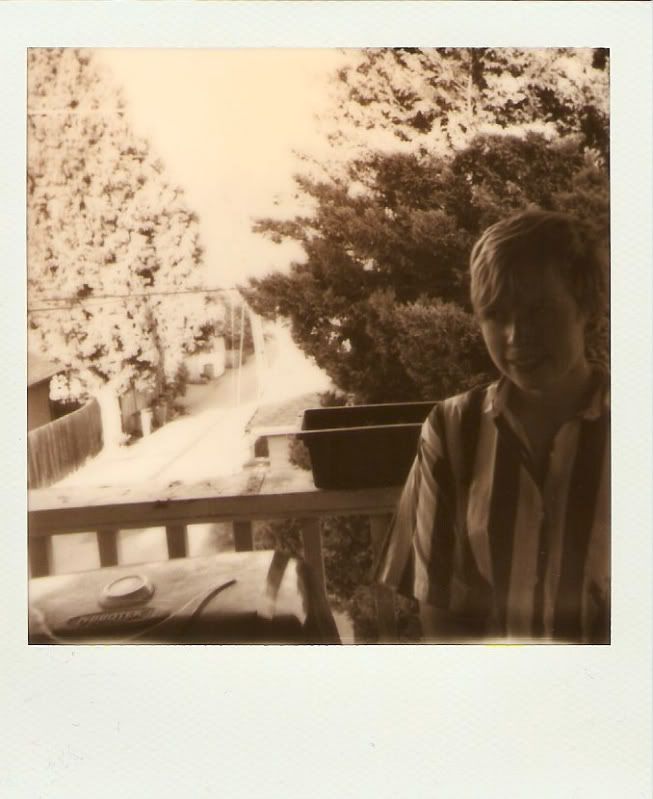
Here are some samples, taken with my Sun 640.


hugs and kisses,
C.

29.2.12

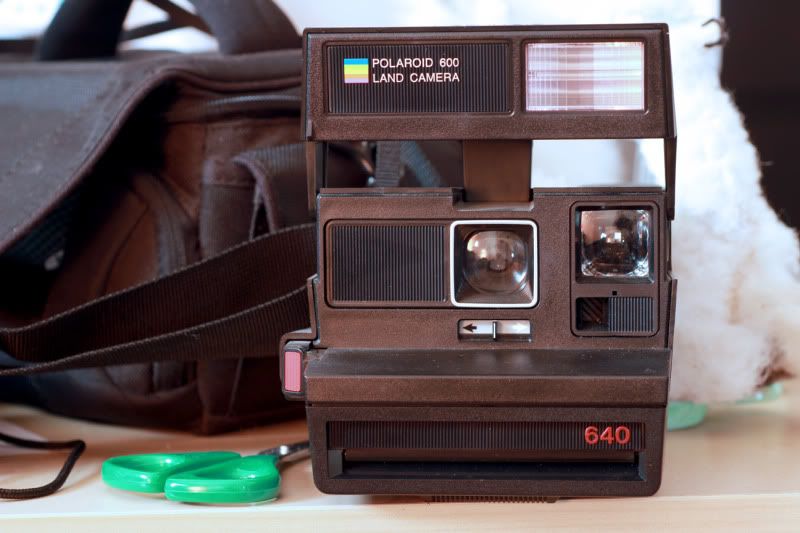
Polaroid Land Camera 640


I always wanted a Polaroid camera growing up. Some girls I grew up with had one and it seemed like no matter what the pictures would turn out as something cool we'd want to hang on to.

So when I found this Polaroid Land Camera 640, also known as the Sun 640, for 2 bucks at Shipwreck Days in Anacortes, I was beyond delighted. But it meant I also had to learn some Polaroid basics...

For example, I could not for the life of me figure out where the power came from. That's because the batteries for these little guys is in the film cartridge, which is kind of a neat idea (you're less likely to be out of batteries when you need them), but also has its flaws. I'm sure that's part of the reason why the film was so expensive, and it also meant that when I bought this camera with some film in it, I couldn't shoot is because the battery was dead. Boo!

In terms of exposure on these cameras, as you can guess it's mostly automatic. The ISO of SX-70 Integral film was always around 160, and of the 600 film was always 640, with some exceptions. So the consumer cameras that went with these films had one variable covered for exposure. Most Polaroid cameras have an electric eye for exposure control as well.

Like many of its brethren in the 600 series, the Sun 640 has a plastic 116mm lens (fixed focus) and a built-in flash. The 640 flashes on every photo, and it also has a lever on the front if you need to adjust the exposure for very bright or dark conditions (like if you want to shoot a snowy field and you don't want it to show up as grey).
 (20/5/12 edit: Actually, having since been able to test my Sun 640, you have the option to flash or not. If you want the flash, you have to hold the red part of the shutter release half way down for a while for the flash to charge, and then push it down all the way to take the picture. If you don't want to use the flash, there is another piece to the shutter release which is just a black tab which you press instead.)

And while Polaroid went belly-up a while ago, the spirit of instant photography is very much alive. Polaroid cameras are some of the most collectable, and they have a huge following, as evidenced by Polaroid Week. Young people just will not let this format die! And that's a comforting notion for those of us reluctant to let go of the past and of the tradition of film photography.

I haven't tested this camera out. While Polaroid film is no longer in production, the Impossible Project is making more for us to enjoy (you can buy it at Photojojo).

There are some photos taken with the Sun 640 by eamesdaedelus over at flickriver.

Have a safe and fun week,
C.