Showing posts with label olympus. Show all posts

16.12.12

Olympus Trip AF


Well, hello? Surprised to hear from me? Me too!

I'm sick of making excuses for myself for not updating my blog. You may have noticed that I tweaked the layout and design and everything-- this is kind of like starting over without starting over. Like dying your hair after a bad breakup. Or something.

Anyway, the point is that I still have things to share and I am still learning about photography and want to help other people learn too. The show must go on!

Without further ado...

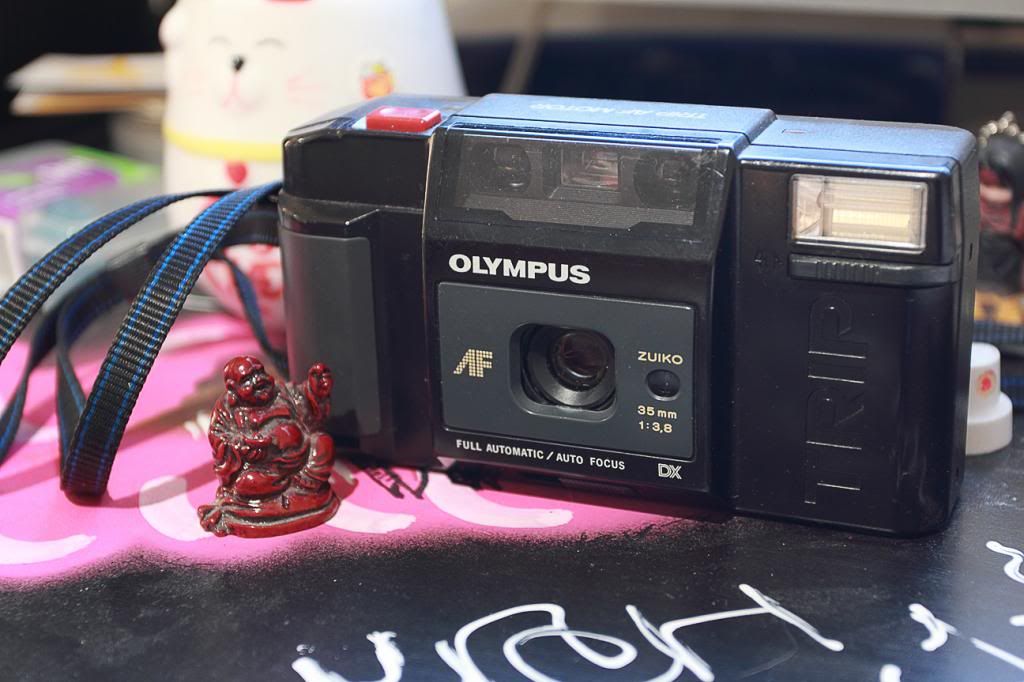
I bought the Olympus Trip AF from the Vancouver Camera Show and Swap Meet back in April (yes it HAS been that long), mostly because I love my Olympus Trip 35 so much and I hadn't explored compact cameras very much. However, the difference between the Trip 35 and the Trip AF couldn't be greater.

A quick google search will tell you that Olympus used the Trip nameplate on these lower end cameras to try to sell them based on the name's popularity. With that in mind, it should come as no surprise that the quality of the Trip AF is not up there with the older Trip models.

Here are the specs: it's a fully automatic camera with a built-in flash, and as you can see from the photo it has a Zuiko 35mm 1:3.8 lens. It apparently only has two shutter speeds (1/85 or 1/120) and two focal settings (1.5m or 4m) among which it automatically selects. And it has automatic film advance and rewind functions. So there you have it: a very uninvolved and easy operation.

And here's what you probably can't find through google:
The shutter and film advance have a very unnerving sound. Very 1985. Very Return of the Living Dead. It's really fun to use, mostly because of its retro appearance, as well as the aforementioned demonic shudders. However the quality is about as poor as you might expect. I ran a roll through my Canon Snappy 50 around the same time as this baby, and the Snappy wins out, for sure, as far as retro compact cams go.

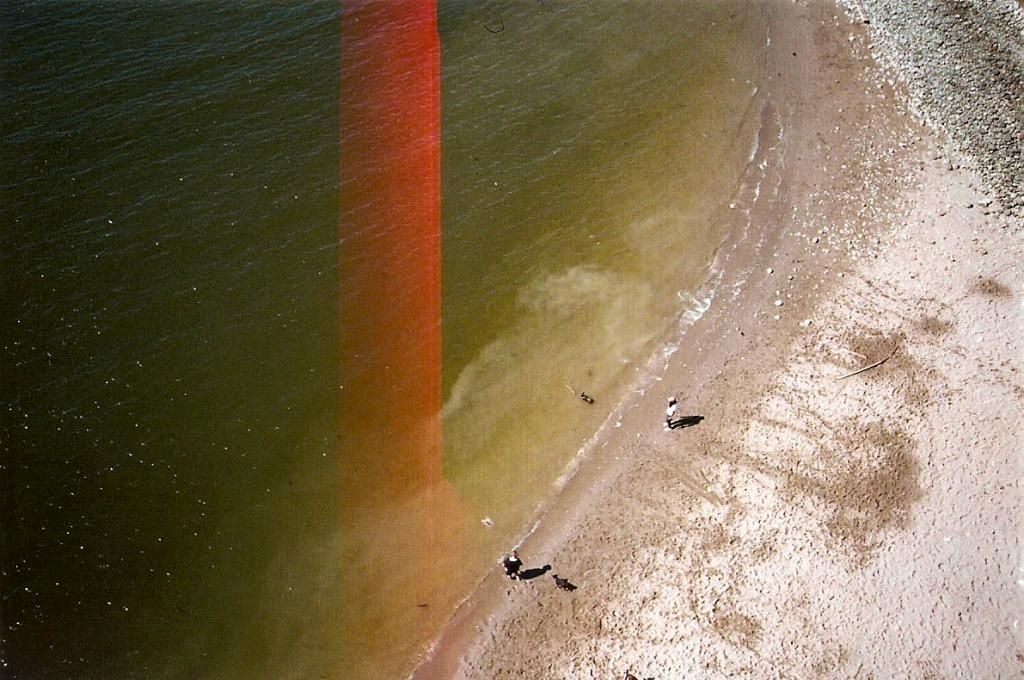
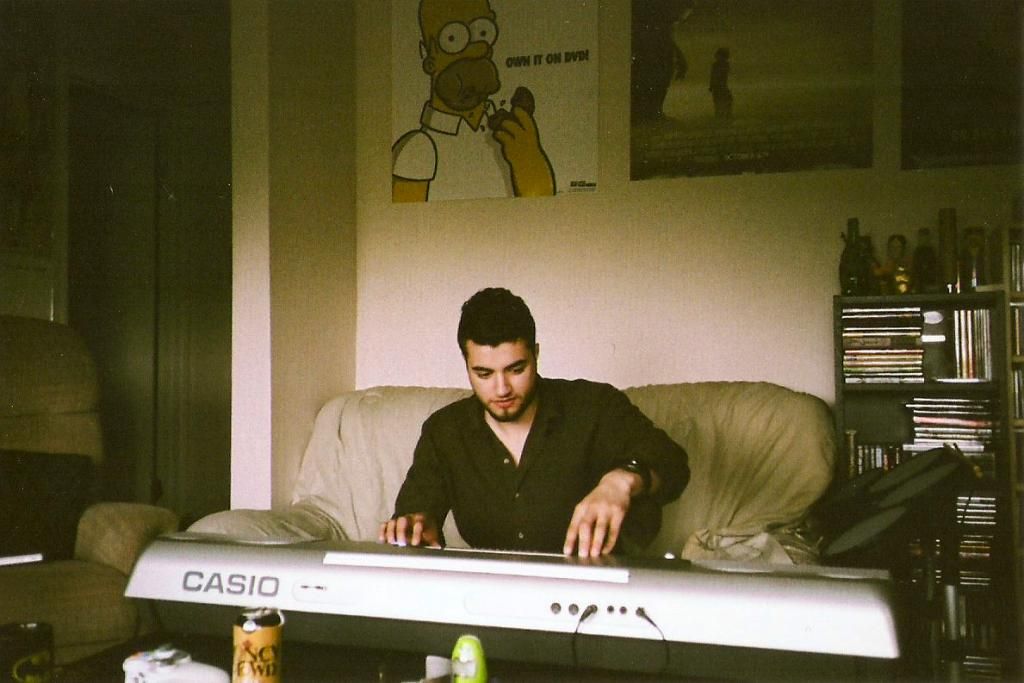
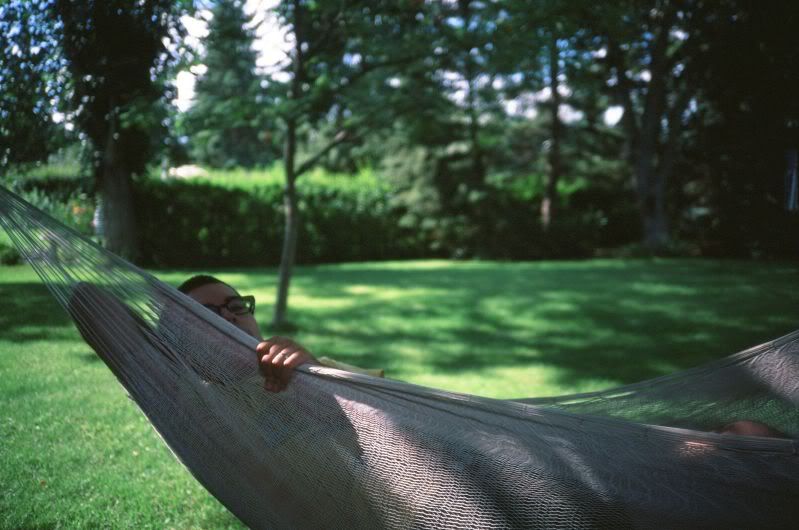
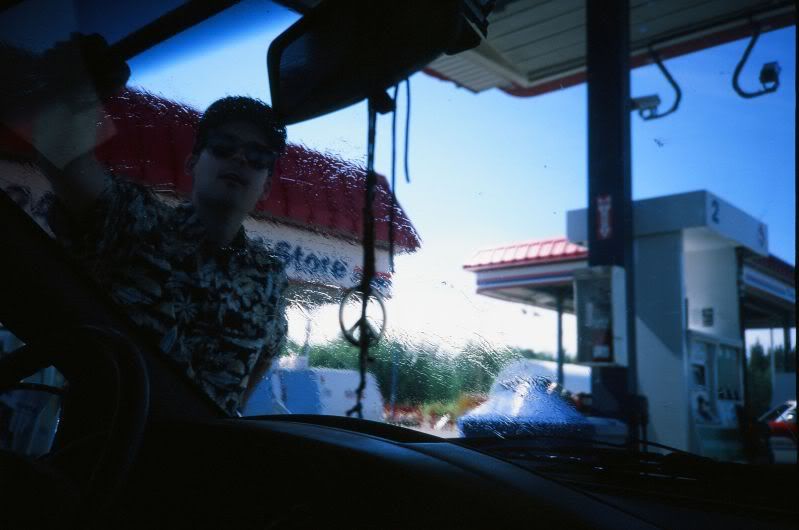
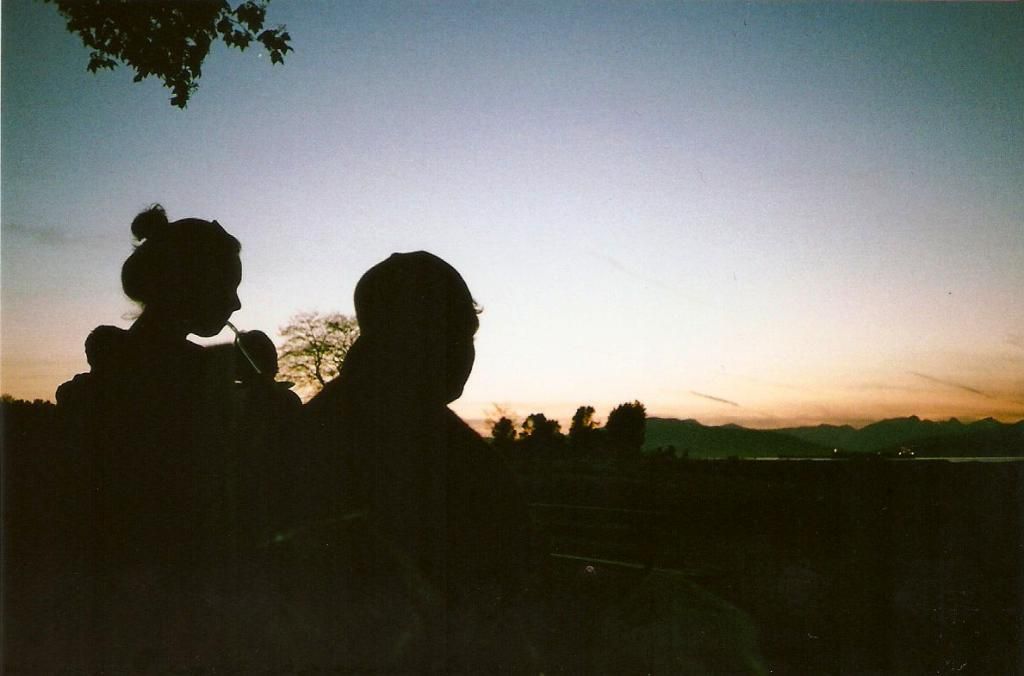
The photos I got were unpredictable and reeking of my-first-grade-school-camera charm, but I still got a few gems. It's a good camera for snapshots or parties because of the built-in flash.

And ahoy hoy, here are the photos:

I don't remember the film I used... probably generic 400 rated somethingorother.


Till next time,
-CWB

10.9.11

Olympus XA


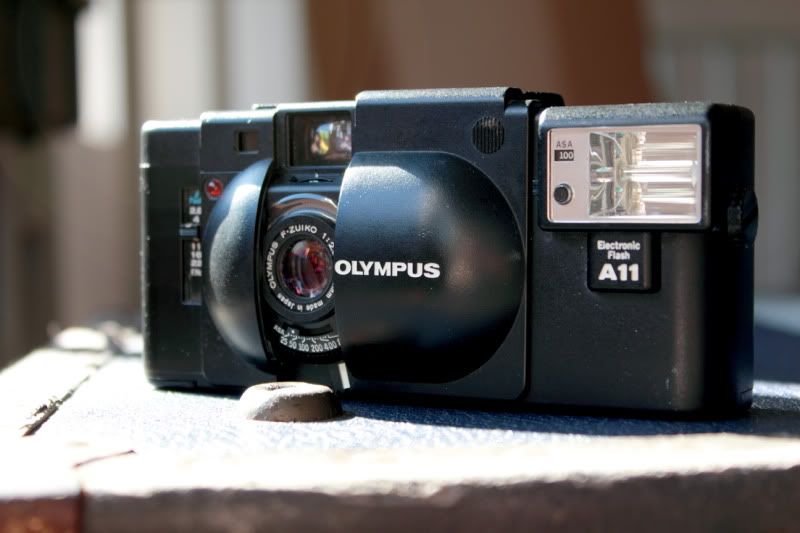
 Guess who's back? Okay, so it's not Wednesday. I'm sorry... but my state of upheaval seems to be finally downheaving itself. So, I bring you this delayed post about a great find: the Olympus XA. I bought this guy at Shipwreck Days in Anacortes, WA.

This camera came out in 1979 and is a favourite of many... but why, you ask? The main thing is the handiness. That flash bit on the camera's right side is detachable and often it's better to remove it altogether, especially since it's only made to work for ISO 100 and 400 films. So, when that piece is removed, you can see that the camera itself is really quite small... and it's light! It's the kind of thing you can just keep in your pocket when you're out with your family or on vacation and it won't weigh you down.

The other great thing is that it consistently takes decent photos. Its lens is a pretty sharp 1:2.8 35mm, which apparently uses "magic" to focus internally (to paraphrase Ken Rockwell). In other words... the lens doesn't retract or extend when you focus or open the camera. This means once you open the camera, it's good to go! So simple... I love it.

Here are the basics: the XA is quasi-automatic, choosing its own shutter speed according to the ISO and f-stop you select, kind of like the Nikon EM. It is a rangefinder, although I found it quite hard to see the guides through the viewfinder. And, of course, it has that flash component as well as the awesome clamshell cover.

Although it is a delightful specimen, the XA does have a couple of shortcomings... The film advance is really, really picky, and you have to load it just right for the film to catch properly. I've also heard of older models getting weird and increasing the distance between shots so you end up with fewer photos on your roll than you should. Also, the little shutter release, while charming, is incredibly sensitive. I often end up snapping the picture before I've totally prepared myself. This can be annoying if you're trying to get your horizon level, or whatever.

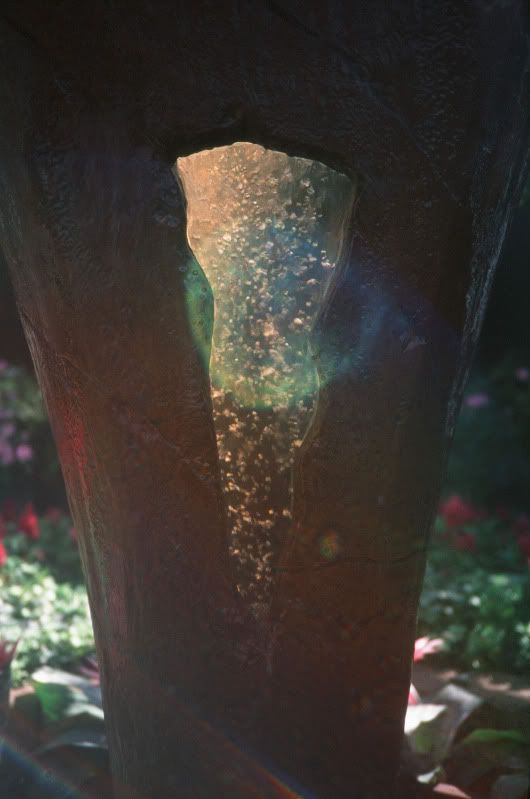
That being said, I don't regret picking up this doodad. The following shots are pretty neat and are enough to make me love this camera forever. These were taken on Velvia 50 in Edmonton. I really like the lens flare in the third one, which was taken at the Muttart Conservatory.


Cheers,
Caity

8.6.11

Olympus Trip 35


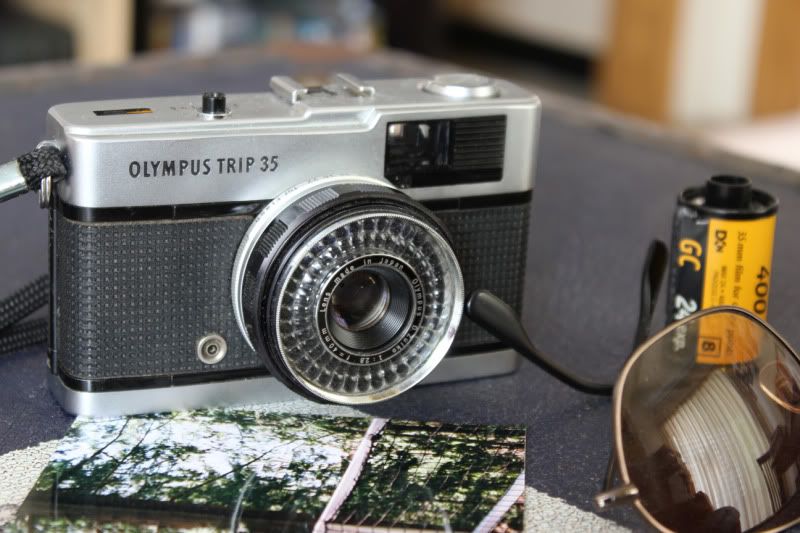
This week's special friend is none other than the very classy compact camera, the Olympus Trip 35.

I paid $25 for this (apparently very dusty) guy, but immediately found another one for $10 somewhere else. So, look around! They are in abundance.

At first I was reluctant to buy one of these, since they're automatic and don't offer that much control. However, they do offer some, and what they lack in that regard they more than make up for in performance.

They were introduced in the 60s as an easy-to-use compact cam to take along when traveling. With that in mind, they are kind of the perfect compact. The Trip 35 has zone focusing, with little diagrams to indicate the general distance you want (landscape, full shot, medium shot, and so on). The shutter speed is entirely automatic, but I think it only has two settings: 1/200 and 1/40 of a second. The aperture can be selected manually or automatically. The best part: this little machine doesn't require a battery, because all that automatic stuff is powered by solar energy, hence the panel around the lens.

Another feature I really like is that there's a little window in the viewfinder so you can see what settings you've selected for your f stop and focus range. Awesome!

Furthermore, despite its simplicity, the camera is equipped with a hot shoe for a flash and screw threads for filters. It was produced well into the 80s, and I think that it has many reasons to have become a favourite for all types, from pros to lomophiles.

Ken Rockwell's review is worth checking out. He compares this compact's lens with some fancy pants Canon lenses and it holds up pretty well, for what it is.

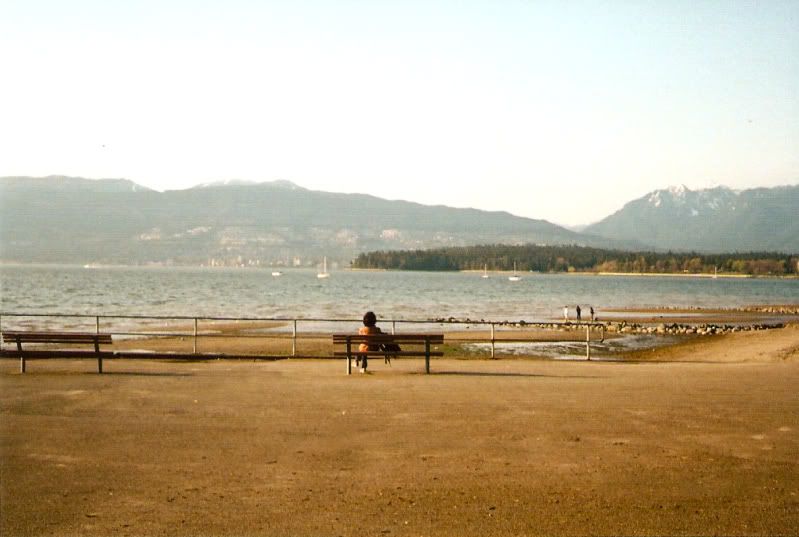
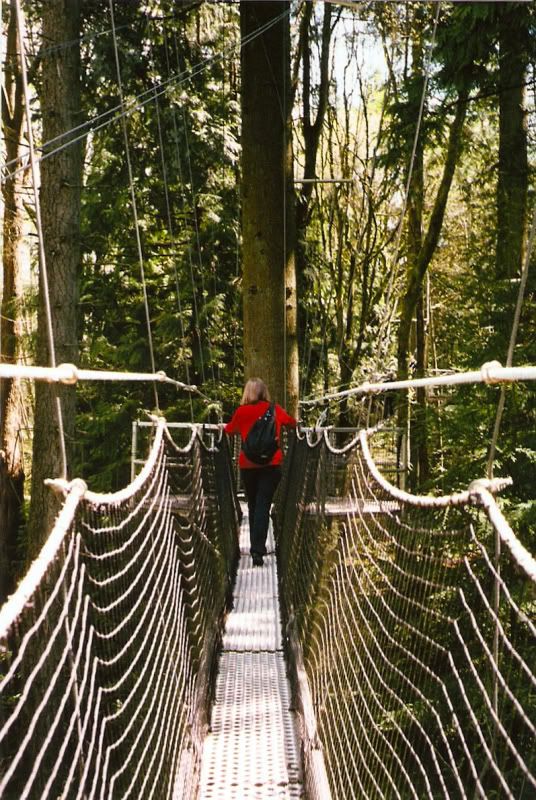
And now for the photos! I believe I used some expired Kodak 400 somethingorather for the stuff at Kitsilano beach and some Fujichrome Superia 200 for the shot of my mama at the UBC botanical garden suspension bridge.