Showing posts with label viewfinder. Show all posts

6.1.14

Kodak Pony (Model C)


Hey yall!

A lot has changed since my last update here. We have relocated to Calgary where I am still in the IATSE 669 trainee program. So far so good. We are renting a lovely house and I have my own office/photo studio. Quasi photo studio. It's small and I don't have any strobes or anything but it's more than I had before!

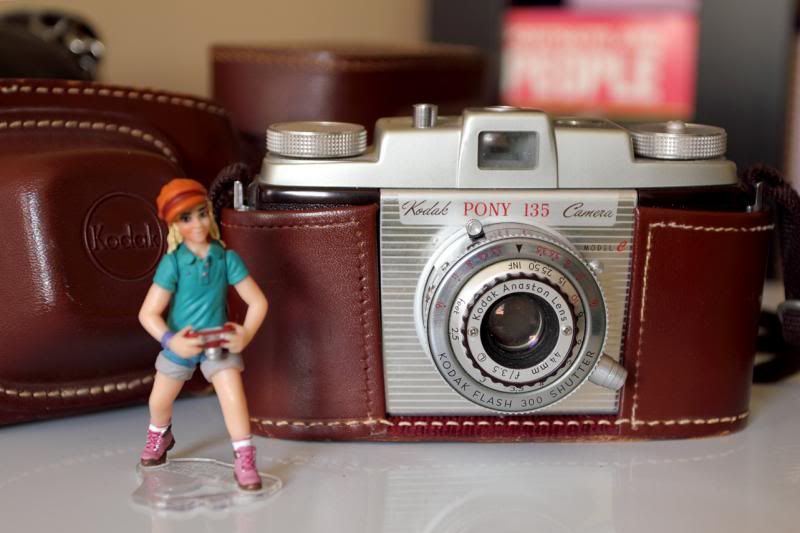
The camera I'm reviewing today is the Kodak Pony, which I purchased at... you know what I don't even remember. It was either at the Vancouver Camera Show & Swap Meet or at a thrift store. Sorry. I'll edit this if it comes back to me.

Anyhow, this camera originally caught my attention due to its design and appearance. You can see in the photo it's got the classic Kodak post-war look going on. This is a model C so it has a shorter lens and faster shutter speeds than its predecessors, and the lens doesn't collapse into the camera.

One attractive thing about the camera is the interface. You can manually select focus (zone focusing), shutter speed and aperture (the iris has 6 blades, which is pretty fancy for a camera like this), and each f-stop is marked with the appropriate lighting conditions for either Kodachrome or Ektachrome film. It also has a shutter cock (but has a system in place to prevent double exposure) and a flash cable jack.

Let me sum this up: it's a pretty simple and light camera, but it's set up to do some more involved things, if you're so inclined. And as I said the iris is nicer than most viewfinder cameras, as are the lens and the shutter (1/300sec is pretty fast for this time/style). I think it's safe to conclude that this was intended to be a mid-range camera for the interested consumer. I would compare it to Canon's Rebel series today: not super expensive but not cheap either, and made for consumers who want more control than a point-and-shoot would offer.

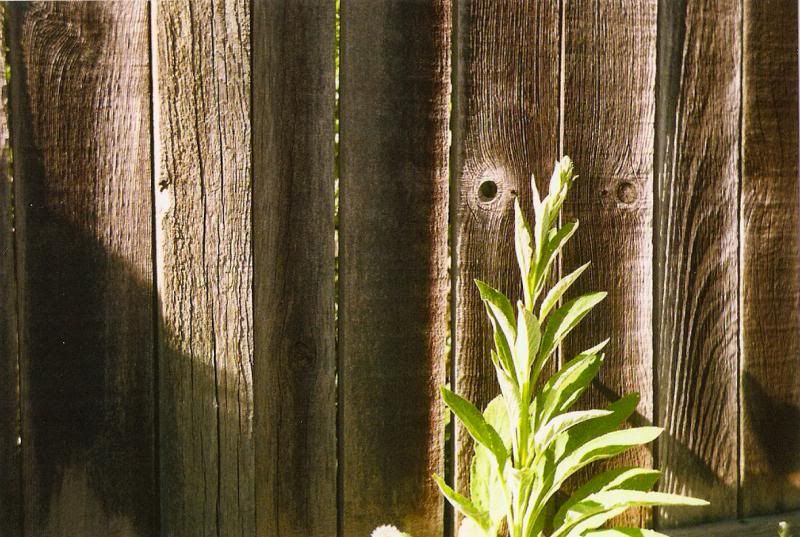
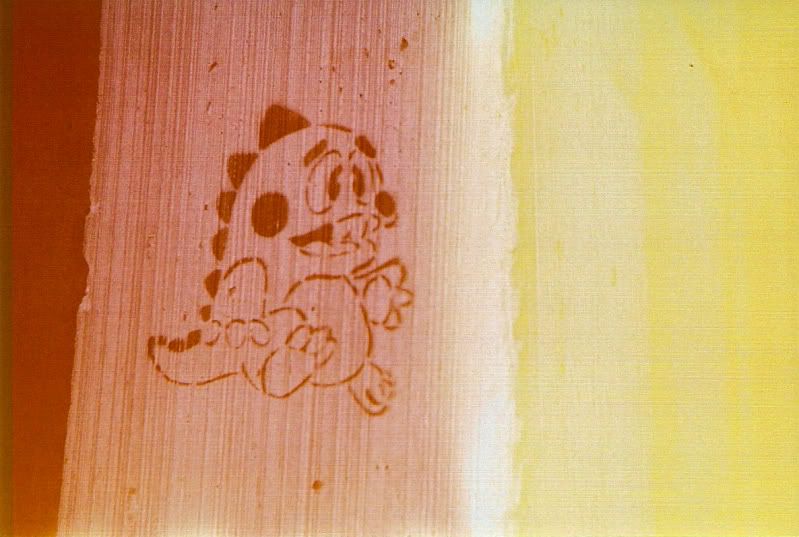
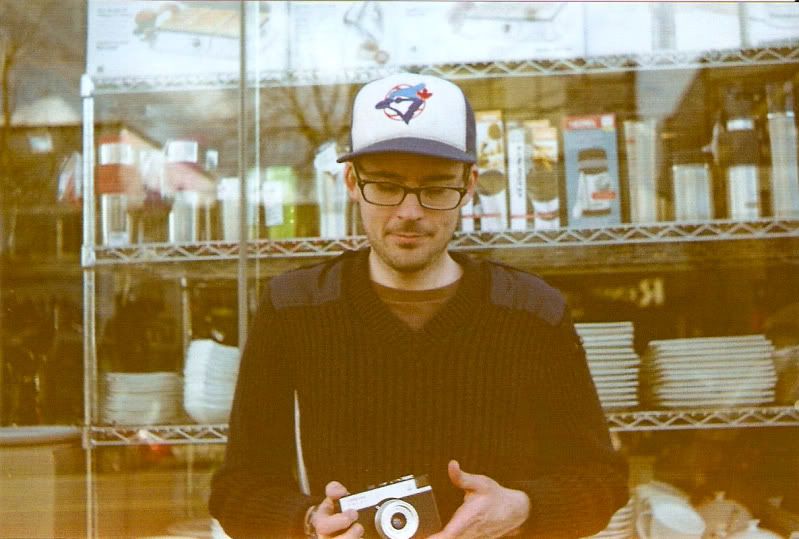
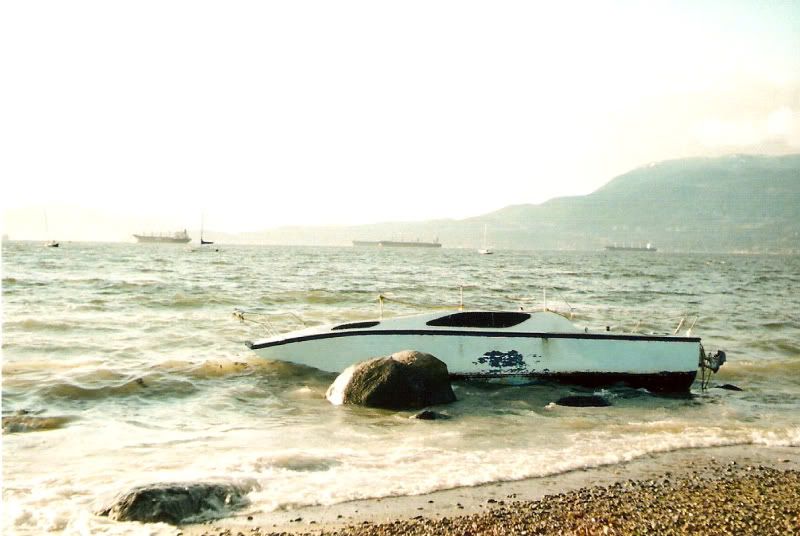
To be honest, I wasn't overly thrilled with the results I got, but it should be noted that I was exposing without a meter (I use the sunny f16 rule which is based on my brain and eyeballs and is therefore SUPER accurate) and my model is a bit beat up. The photos I got look a lot like those from other viewfinder cameras I've used. That being said, the way the shallow focus falls off is really nice, and the lens is actually quite sharp. I was using cheapish colour film, too, so it might've performed better with some nice colour reversal or B&W film.

Have a look for yourself!
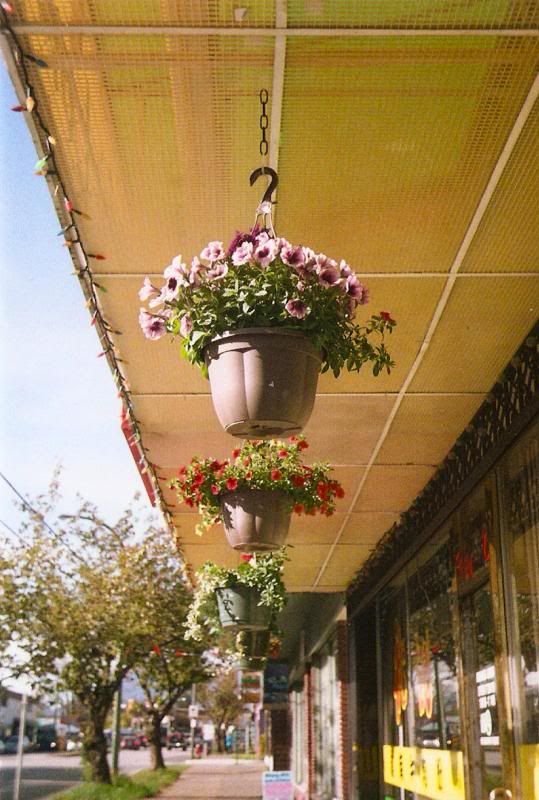


till next time


17.8.11

Ansco Lancer


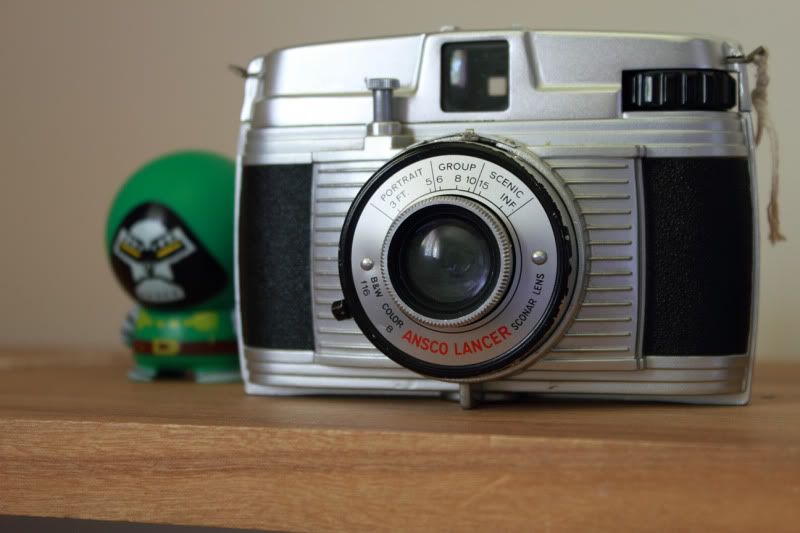
This week's camera is the Ansco Lancer, a relic from the 1950s. The model I have is my dad's camera, and it was actually his first! As you can see, he must have thought at some point that a camera strap made of string was a good idea. I found this guy in my parents' basement collecting dust.

So, while the Lancer was sold by Ansco on this side of the Atlantic, it's actually a Bilora Bella 44-1 minus a B setting, manufactured in Germany. It's a very simple viewfinder camera with zone focusing, along the same lines as the Agfa Silette. It has a whopping two shutter speeds (50 and 100) and an impressive two f stops (8 and 16). It has a Sconar lens, although I'm not sure what focal length it is. This guy takes 127 film, which, again, is available from The Frugal Photographer (see the link on the right), but is otherwise pretty obsolete. I wholly intend to test it out one day, but today is not that day.

The Lancer was a pretty cheap camera, but it has some fun quirks. The cheapness itself is kind of a quirk, actually, since the lens is so basic that you can see through it perfectly. It's kind of hard to believe that it's doing anything at all! And then the winder makes a clicking noise once you've wound to the next frame, but then you can just keep on winding forever if you want to, so that takes some getting used to. Also the name, "Lancer"...  really... It's easy to see how it would be perfect for a kid learning how to take pictures in the 50s and 60s, though.

You know... it's also kind of interesting that my dad used this camera for years and still has it, and that his family used their Brownie for even longer. Almost every camera I had growing up ended up breaking in a couple of years, and with so many chips and digital bits, newer cameras are a lot harder to salvage, I think. Maybe.

So, I will continue to dig through my dad's belongings and see if I can uncover some of his old photos, and maybe I'll run some film through it myself. However, Marcy at Junk Store Cameras has an amusing review of the Lancer as well as some test shots. Check it out!


Cheers!
Caity

13.7.11

Spartus "35"


Welcome, again, to the wild world of forgotten photographic.... things. This week's photographic thing is the Spartus "35." From here on I will cease calling it the Spartus "35" for my own convenience, but I think it's kind of neat that in the style of graphic design from the 50s, it was normal to put things in quotes like that. You still see it from time to time, on some business slogans. To me in my whippersnapping ways, I always think it looks insincere, like the way people use air quotes to underline sarcasm. Also, sometimes I wonder who's supposed to be saying whatever's in quotes. I understand if a business has a slogan like "The best!" in quotes, but would "35" be simply quoting the person who named it? Curious, indeed...

Anyway, thanks for sticking with me so far. The Spartus 35 is one of many models made by Herold manufacturing in the 40s and 50s, including the Spartus 35 F, the Herold 40, and others. There seems to be a lot of confusion, also, over which model is which, some people calling the Spartus 35 F just a 35, and calling this guy a model 400. After a bit of research, I'm pretty sure this is the real deal, the straight up Spartus 35 (or "35" if you prefer). Big deal, right?

Basically, Herold made a lot of cameras, and the company's previous owner made a bunch of similar cameras under different names around the same time, resulting in a bunch of cheap, simple cameras being produced. Today they are often treated as toy cameras. Hmm.... sounds familiar.

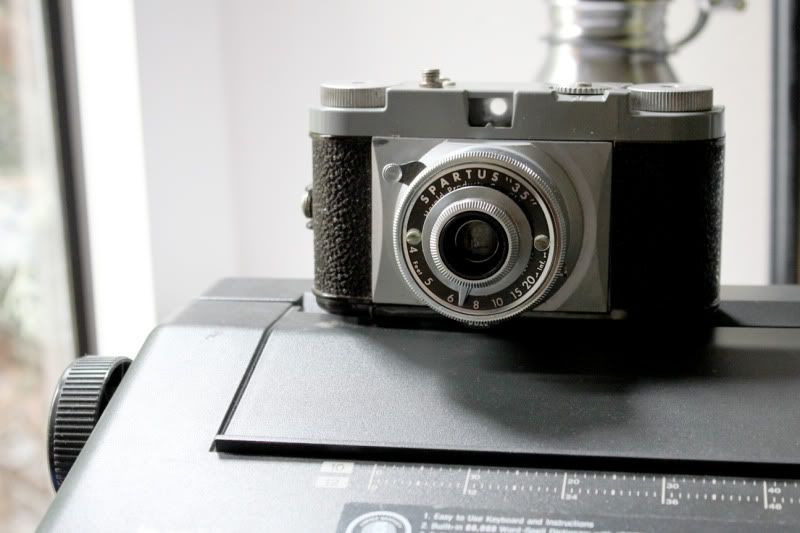
The Spartus 35 is manual, and as I said before, incredibly simplistic. It has zone focusing (there's no info about the lens or shutter), and the iris has 4 settings: bright, hazy, cloudy, and dull. There's actually a wheel that you turn, that has 4 different sized holes which you line up with your lens, in place of aperture blades. As you can see, it has a viewfinder window (which is quite dirty) and is mostly made out of plastic. It has a few other features that I don't understand (a switch for "T" and "I" as well as what looks like an input of somekind), but overall it's pretty bare bones.

I find this camera interesting because in so many ways, it is just like a Lomo camera. It's simple and cheap and its lens even takes pictures that look characteristic of those Diana cameras... Some are very soft and milky. Yet, this camera cost 5 dollars, while your cheapest Lomo is still probably at least $40.

For a laugh and some more photos check out this account of the Spartus 35 and its manual... it'll make you chuckle and maybe explain a bit more about Herold Manufacturing.

Here are some shots for you!


xoxo
Caity

15.6.11

Agfa Silette


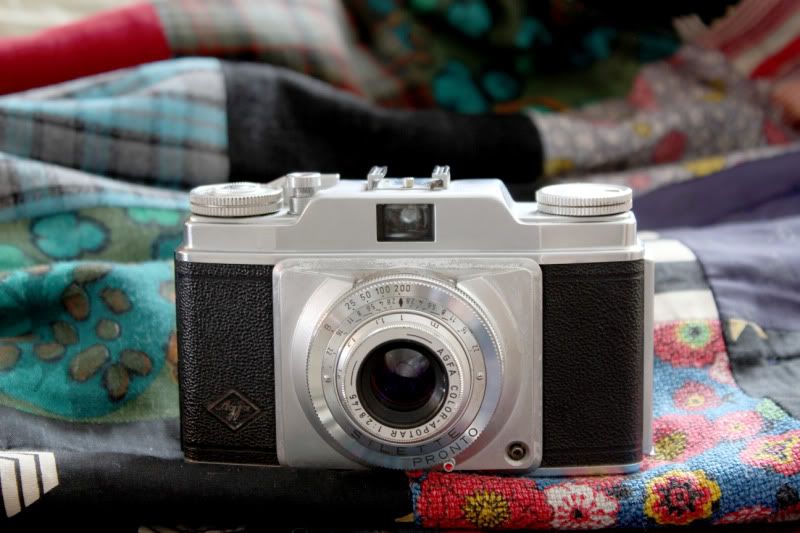
This week's camera is a charming little relic, the Agfa Silette. Produced from 1953 to the early 60s, this model was the first of many to use that name.

I got my model from an incredibly nice fellow who grilled me on the historical relevance of my eBay handle. He also was one of the many older folks who are really stoked to see young people still using film. Even when I just took this camera out for a walk, a guy came up to me and said it was the same camera he used as a kid, and offered to take a picture of Al and me.

I'm a bit biased, but this is a pretty good example of the analog/digital dichotomy: one tends to bring people together in unexpected ways, while the other seems like it should make the world smaller, but it in fact alienates people. But that's a discussion for another day (or with my fiancé, over at 43 Ends).

And before you feel like pointing out the hypocrisy of arguing the faults of the digital age in a blog, let's return to the Silette!

This lovely machine is pretty lo-fi. It's a 100% manual camera with a straight-up window viewfinder (the technical term, of course), zone focusing, a self timer and a hot shoe. This guy has a Pronto shutter, with five shutter speeds (up to 1/200 sec, and including B), but there were other models as fast as 1/300 (Prontor) or 1/500 (Compur). The lens is an Agfa Color Apotar f2.8 45mm, but again, there are other Silettes with slightly different lenses such as a f3.5 Color Apotar 45mm, a f2.8 50mm Agfa Color Solinar, and a Agfa Agnar f3.5 45mm. The Agnar models I believe all had a Vario shutter and a different finish ("silver paint").

As far as antiques go, this camera's a beaut. A few of the more useless functions on mine don't work, such as the film stock indicator. However, even after 50+ years the shutter on this guy works perfectly and the lens is flawless. Cosmetically, it could be in better condition as it quite tarnished in a few places. Fortunately I'm not too concerned about cosmetics when I have a machine that takes good pictures.

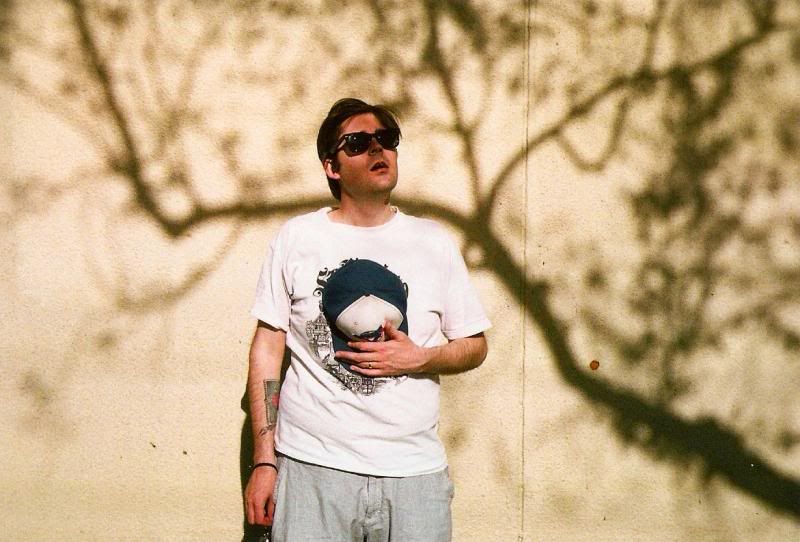
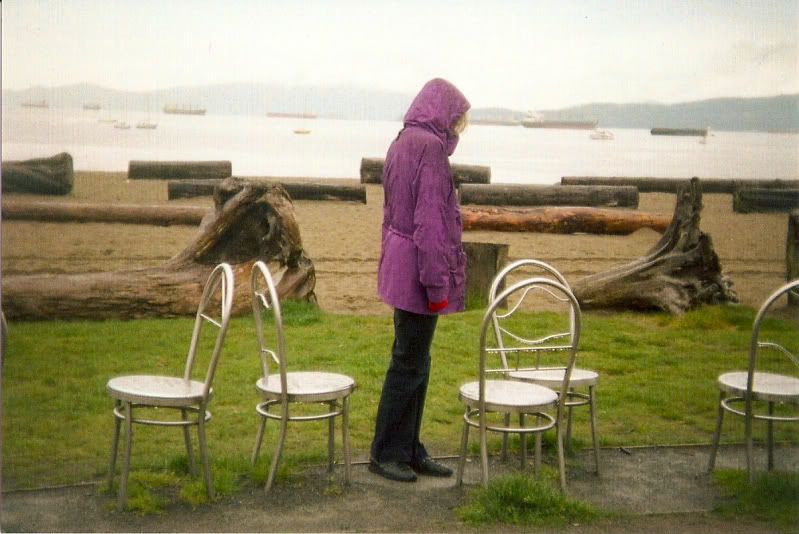
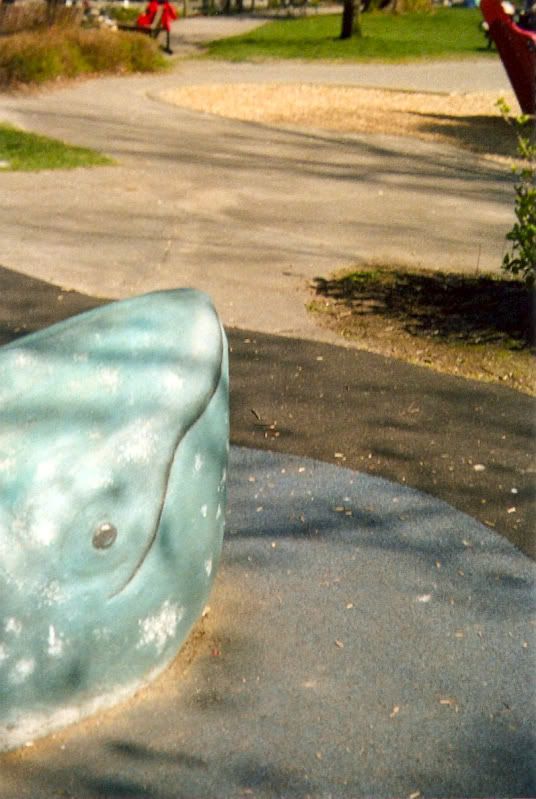
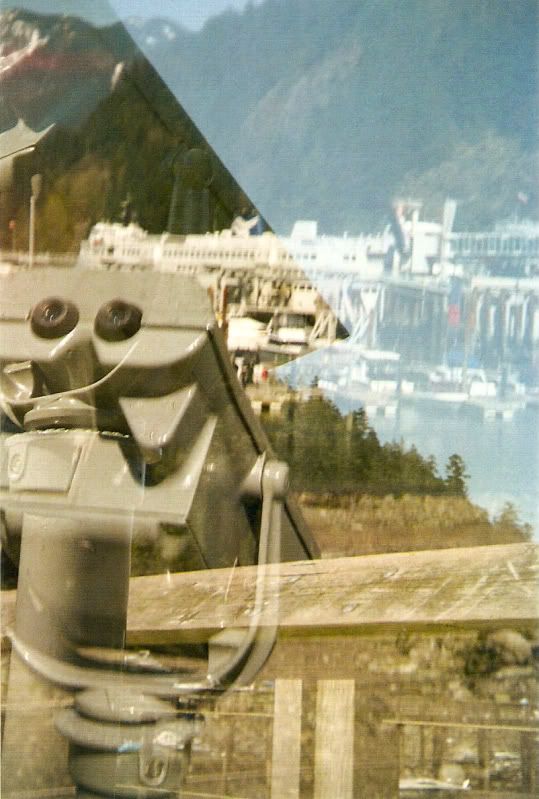
This was my first go trying to snap away without a light meter, and I was still learning so the exposure isn't great on these (but I like to think they're no less charming). Also I guess I still have to figure out how to compensate for the parallax on these viewfinder cameras (and, apparently, relearn how to get a level shot!). That in mind, these shots were a nice surprise from a camera I didn't think would even work.

All these photos were take with Superia 200.


Cheers,
Caity